
Historic Hood River
Engine 16, Mc R R R
3-19-2014
Notes

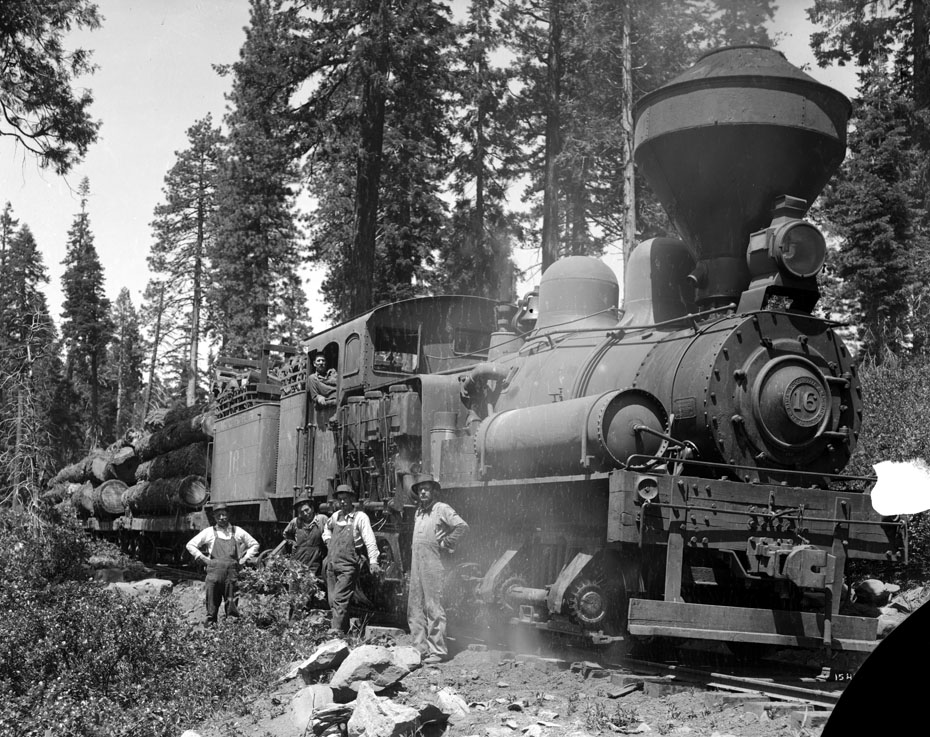
Yesterday you met a logging crew from Weed California. Today you meet their neighbors on Engine 16 of the McCloud River Railroad. The McRRR operated in the Mt. Shasta area of northern California from the turn of the last century up to very recently. This particular wood fired Shay locomotive was built by the Lima Locomotive and Machine Works in 1911. It worked for the McRRR until 1924, when it was sold to another operation. It was scrapped in the 1950s.
Image courtesy of the Episcopal Diocese of Eastern Oregon

l.e.
One for Arlen!!
In the previous photo we saw work horses, but this thing is really a work horse.
l.e.
Arthur will laugh at my feeble attempts to learn how to use google docs. I have saved a page about the Shay locomotive that made the run from Klickitat to Glenwood. There is a little bit in there about the workings of the Shay.
You will have to read column one, then jump to page two and then go back to column two.
https://docs.google.com/file/d/0BxvbFeImNZs0OFNqMkd2OXJ2bE0/edit
Rawhyde
Does anyone know why the smokestacks were so wide at the top?
Arthur
Rawhyde, I believe the shape of the stack has to do with burning wood for fuel. Hopefully Arlen will fill us in. I can tell you the tender is stacked high with cordwood. By this era the OR&N was burning coal.
Buzz
Maybe a filtration system for catching embers.
Kenn
This is a spark arrestor, necessary for all wood burning locomotives.
Arlen Sheldrake
Even in the diesel-electric locomotive era, sparks whether out of the stack or from steel wheels/rails, were summer danger. For instance, while operating, the Port of Tillamook Bay railroad would pull a tank car outfitted with sprinklers running during the hot summer months. Not sure what Southern Pacific used on the same railroad back in the steam era but at least they weren’t burning wood.