
Historic Hood River
Big Sticks
7-9-2025
Notes
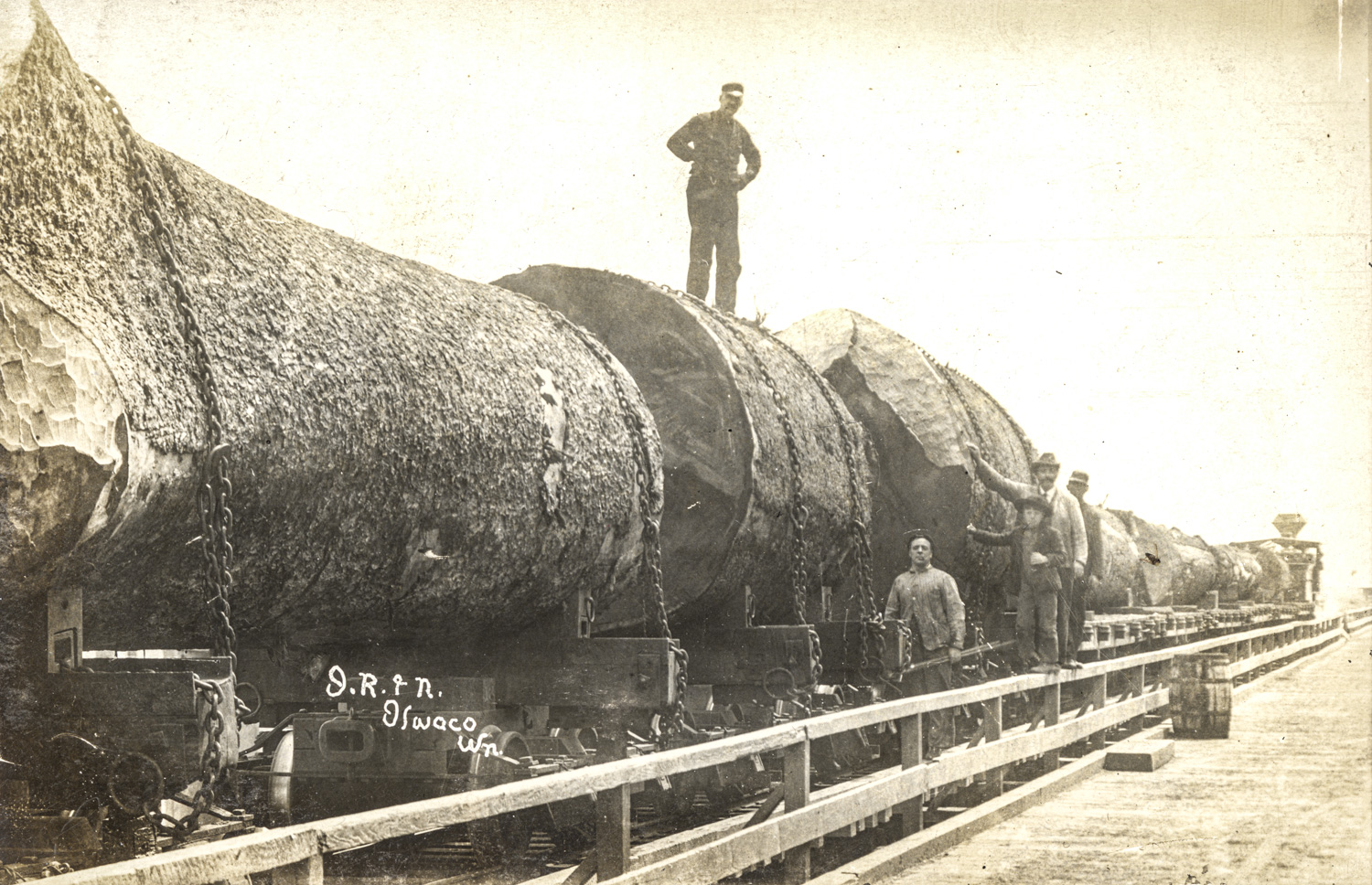
Those are some pretty impressive logs loaded on railcars near Ilwaco, Washington. Ilwaco is a coastal town just north of the Columbia River bar.
Does anyone recognize the species of wood? It doesn’t have the deep furrowed bark of Douglas Fir. You can see all the axe cuts and the crosscut saw marks. There’s also a nice steam locomotive.

BethH
I’m guessing spruce – or hemlock….
Pat A
Looks like spruce.
The scale of logs and the railroads that were the force moving virtually everything from the camps to the tracks themselves was incredible.
Thorn
I’d say definitely Sitka Spruce. One, photo is in Ilwaco, two, spruce love the coast, three, spruce bark looks like puzzle pieces, and four, looks just like the big trees you pass in Ecola or Oswald West parks. But besides the incredible size, with one tree filling 10 train cars, but how about the kid logger, maybe 10-12 years old? Apparently enjoying his pipe too.
Roger Sheldrake
And don’t forget that “Little engine that could” up front!
Kalley
My logger friend says it’s Spruce.
kmb
The size of those logs and how they managed to handle them is mind boggling considering what they had to work with in those days. I would like to see how they handled these logs at the mill once they got there. Must have had some big saws. Don’t know what type of tree this is, but wonder about the near end of the log in the far left margin of the photo…it almost looks like the trunk split into two main branches, which I wouldn’t think would be the case for a spruce tree.
Alan B Winston
Curious whether I could identify the locomotive from the little visible in this image, I went to “North Beach Peninsula’s [sic] IR&N” by Sydney Stevens. Lo and behold, I found a picture of what is almost certainly the same train, with Ilwaco Railway & Navigation locomotive No. 4 posed by the same box and barrel, with some of the same men in the same outfits. Per that book, the railway built facilities at Nahcotta to load logs rafted from across Willapa Bay, hauled them to another new pier at Ilwaco for unloading into the Columbia, for rafting to mills. The traffic started drying up after two years “when huge seagoing log rafts were introduced.” Doesn’t make sense that seagoing rafts would disrupt log rafting from Ilwaco to mills on the Columbia, so I’m guessing that seagoing rafts were also constructed on Willapa Bay. Typing that sentence also made me realize that rafting logs upriver to Longview and beyond would be “downstream” at flood tide. I wonder how far they’d get before the tide turned, and if they had regular tie-up places to await the next flood. Could explain some of the odd arrays of pilings I’ve seen along the river. Hmmm … I’ve been paying more attention to navigation on the Columbia above Bonneville than below. New topic for research.