Historic Hood River
Dairy Farm
7-12-2017
Notes

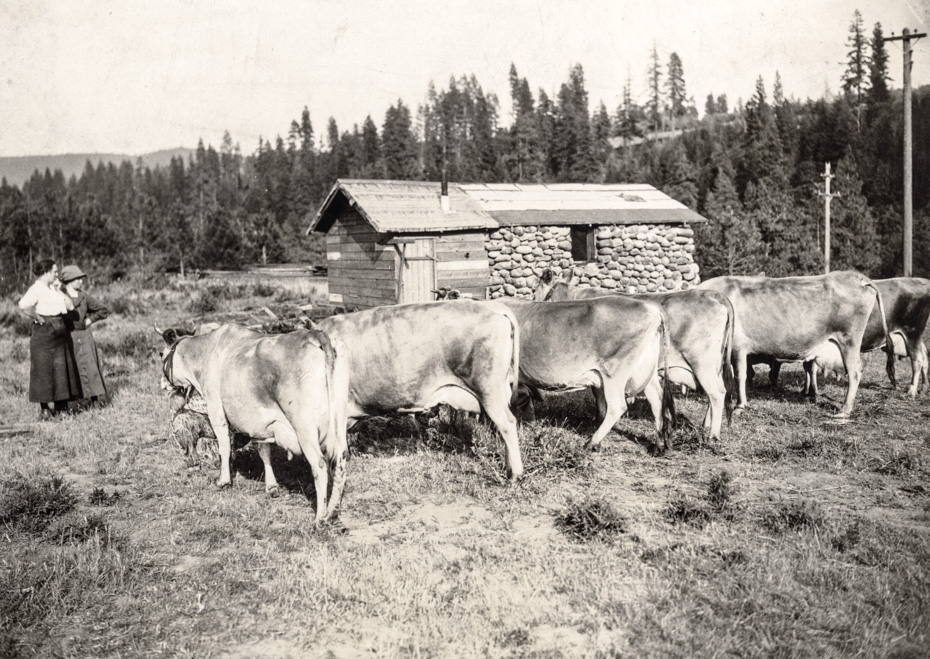
You don’t see much in the way of dairy farming in the valley today. Back before it was easy to move refrigerated milk long distances, local dairies were a part of the landscape.

The History Museum of Hood River County
Bringing the Rich History of Hood River County to Life
You don’t see much in the way of dairy farming in the valley today. Back before it was easy to move refrigerated milk long distances, local dairies were a part of the landscape.

Buzz
Had shirt-tail relatives with a small dairy farm who lived across the creek from us when I was a kid. Will never forget hot homemade bread fresh out of the oven, slathered with fresh homemade butter. Good stuff.
L.E.
A Hood River version of Heidi, with cows instead of goats.
Since we can see power poles, this is probably someone’s farm, but often times in the early days, the summer farm ground was needed for putting up hay, so someone would take the dairy cows to higher meadows and spend the summer with them. Or, because of the dry summer, grass became scarce, so the cows were moved around to grazing areas.
The cows might be left with their calves so no one had to milk, or the cows would be milked in the morning, saving the cream to make butter and the calves would eat in the evening.
A way of life that we have left behind due to electricity, irrigation, grocery stores, etc.
sandra asten
My uncle Russell Rayot and his wife Daisy raised Gurnsey milk cows back in the 1940-1980 era in a beautiful valley in Hood River. He delivered the fresh milk each day around the area. A wonderful man who loved his cows.
Lindy Kuehnl
My Aunt Daisy & Uncle Russ were an integral part of local and world history.
They had their wonderful dairy where they would name their cows after family members. Both had also worked in the Portland Shipyards during the war.
Daisy was a supervisor and was invited by the Admiral on the christening voyage of one of the war ships.
They were both hard working, wonderfully loving people.