
Historic Hood River
Tin Divers
Notes
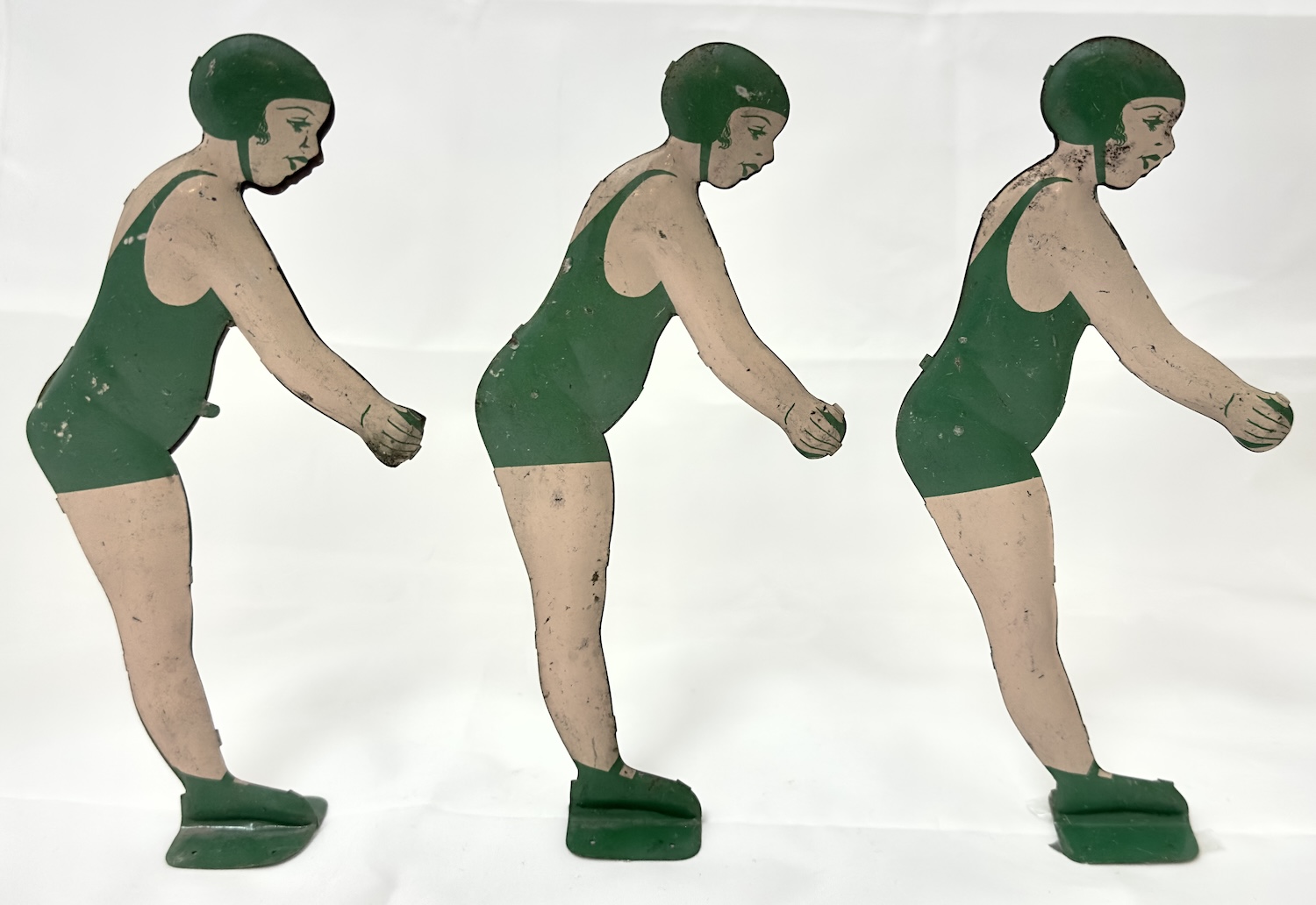
Grace has selected these tin swimmers from the museum collection for today’s artifact:
These three tin diving girls come from a set of nine, originally used to advertise Jantzen swimwear. The “Jantzen Diving Girl” was used in advertisements as early as 1920, initially appearing in red and soon in green, though green versions remain much rarer. These figures are from 1921 and were likely used for storefront displays. A similar image appeared in the July 15, 1921 issue of Vogue magazine, suggesting that the figures were likely used to advertise Jantzen’s 1921 summer collection. Jantzen swimwear was manufactured in Oregon through the 1990s; the company is now based in California. However, the iconic Oregon-made “Diving Girl” remains a central element of their branding today.
Did any of you work for Jantzen when they were located in Hood River? I’m wondering how their early presence here related to the sporting clothing manufacturing of following decades (such as Dakine, Promotion, Pistil, Airtime, etc.)

Roger Sheldrake
I just had the opportunity to read a family history put together by Pete Jubitz (Franz Hardware) of the Sproat family. Part of that story was the relationship to Carl C. Jantzen. Thanks Arlen for loaning it.
Pat A
I remember a Jantzen outlet store in Hood River, I think now it’s the hobby shop is?
My mom knew of every fabric store in the NW.
Thorn
@Grace, is there any more info about these tin divers figures–like the year, why nine in a set, or how they were displayed? Are they women or young girls, are they diving?
@Arthur, when, where and what was Jantzen doing in Hood River, a shop or manufacturing?
Great Oregonian article on Jantzen history from their centennial: https://www.oregonlive.com/O/2010/08/jantzens_100_year_history_reve.html
I like how the famous Red Diving Girl was created by a woman, Florenz Clark, just like the Nike swoosh, two of the world’s most famous icons and apparel lines.
Marilyn
I worked at Jantzen in 1981. I think Dakine was just becoming a presence in Hood River at that time.
Arlen
you are very welcome brother. Pete tells me that he donated two copies to the HR Museum. It really is a great read/history.
L.E.
Back in the 1980’s there were about 4 ladies from Glenwood who carpooled to work at Jantzen in HR.
BethH
I worked a fall swing shift at Jantzen’s in 1975- there was only 6-8 of us helping to catch up, I think. We were spreading huge, long bolts of fabric out on long tables. Someone would lay out the patterns and another cut them out. It was an electric cutter that was plugged into the ceiling, and skimmed along the top of the fabric. they work their way down the table. I remember a lady, on day shift, working with her head too close to the cutter, probably trying to follow the lines carefully, and some of her hair got sucked into the side of the cutter! You can imagine her scream – it did pull a chunk of hair off her scalp.
When we were switched day shift, I was a “Presser” on day shift- working with a hot steam iron. And it was piece work! They would time you to see if you were ironing enough pieces per minute.
I left spring of ‘76 to plant trees….a job I enjoyed immensely!
Grace
@Thorn, I am not sure why the figures came in a set of nine; they were found at the Hood River Valley Adult Center Thrift Shop before they were brought to the museum, so there may have been more than nine figures originally.
It’s difficult to say how the figures were displayed, but the stands below each figure’s feet have small holes presumably for a pin, so they were likely pinned to another surface. I am not certain if they are women or young girls, although most early Jantzen advertisements do seem to depict women.
Here is a closer look at the 1921 Vogue magazine advertisement where the tin figures and woman in the illustration share a similar swimsuit color and pose. https://vintagedancer.com/wp-content/uploads/1920-swim-jantzen.jpg You can also find many images of antique Jantzen swimwear online.